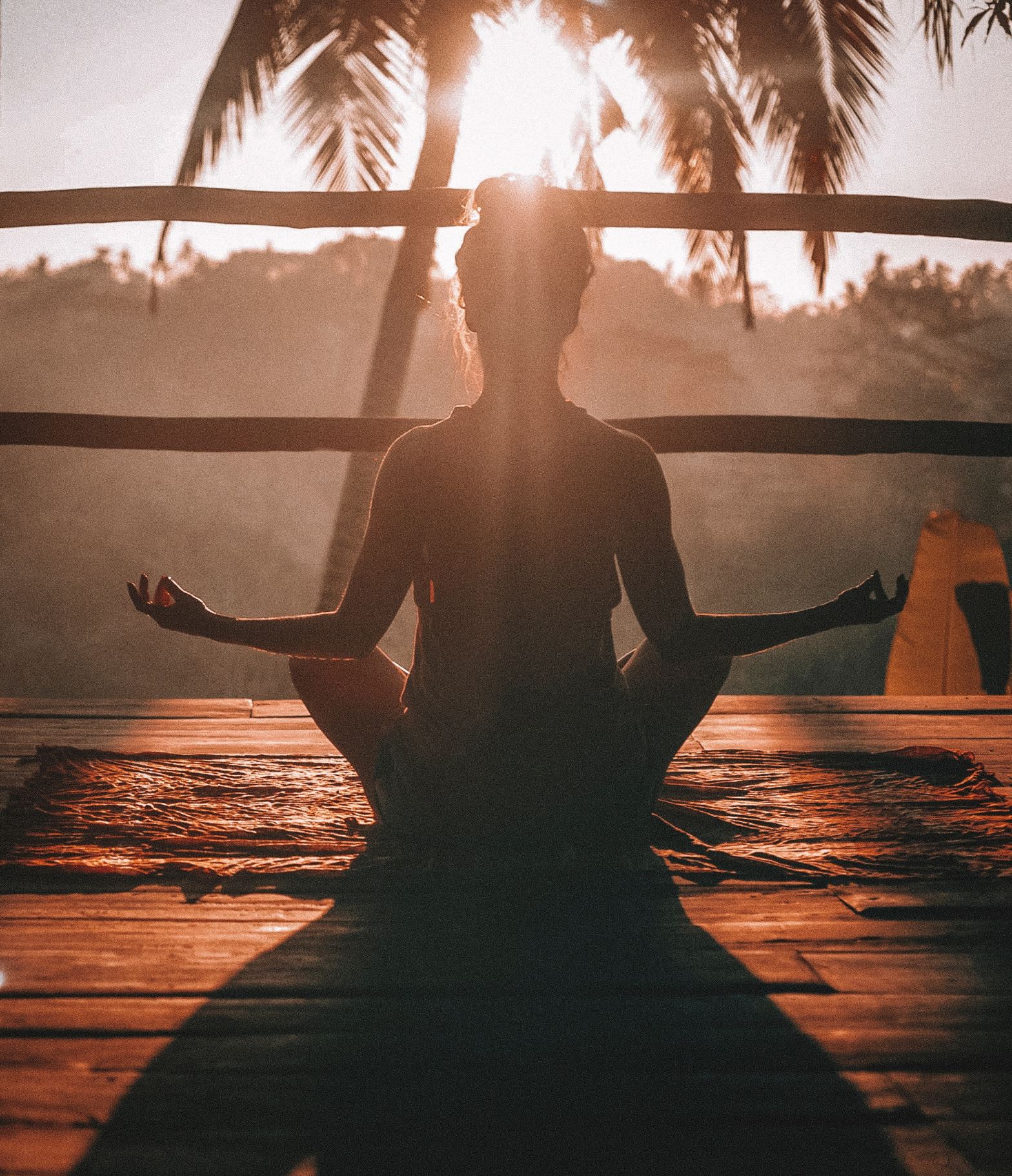
During my yoga journey, I also found the world of meditation. The Chakra meditation is one of my favorites and if you attend my class, you might experience it.
This practice is a form of meditation that focuses on blocked chakras or chakras that are out of alignment. During this meditation, it is possible to focus on each of the individual chakras one by one or only on the one that is out of balance. There are many signs that they are out of alignment. For example, various physical pains such as headaches, back pain, or indigestion may occur. In addition to physical symptoms, a person may feel restless, or even frustrated, and may suffer from excessive fear or instability of their emotions. If, on the other hand, the chakras are in harmony, a person feels emotionally balanced and is in good physical and mental condition. Balanced chakras, therefore, bring better handling of life’s challenges in any area.
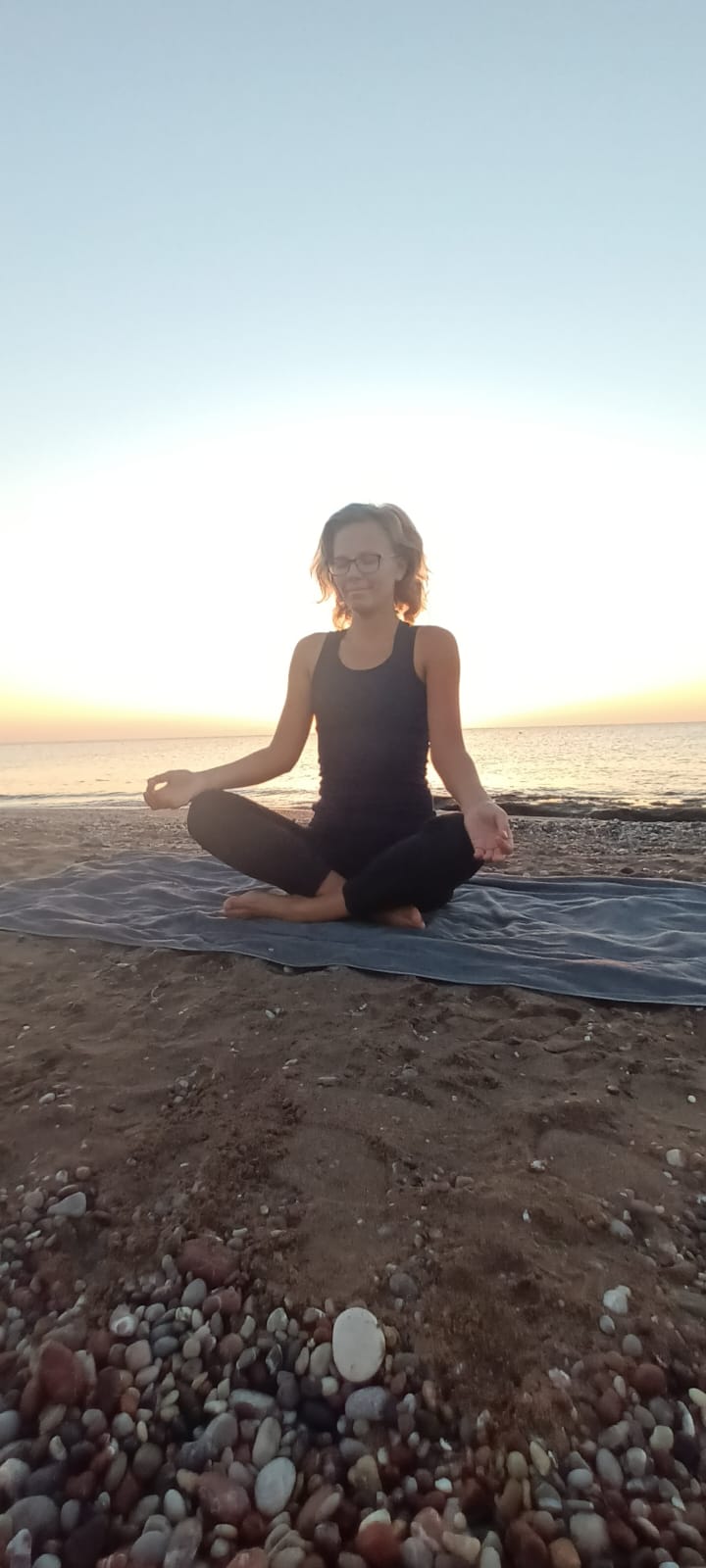
And what does this meditation look like?
This meditation uses the visualization of the colors of individual chakras, focusing your consciousness on individual elements related to each chakra, or on the basic needs of each individual chakra. It is also possible to use music and scents that can influence the chakras and help align and open them. During chakra meditation, it is possible to use deep breathing, when we try to breathe through each individual area connected to the location of the chakra. As with any other meditation, it is recommended to always meditate at the same hour so as not to disturb the regular rhythm of our astral body. The most suitable time for meditation is the moment after waking up, as our brain is not yet so burdened by surrounding influences. As for choosing a place to meditate, it is best to meditate in the same place that is also not used for any other activity. Each activity carries with it its own unique vibrations that intersect and influence each other. If we also meditate in the same space, this place remains filled with positive energy, which is produced by meditation. If possible, it is recommended to meditate outdoors or at least near an open window. The position of our body during meditation is also important. In no case is it recommended to lie on the ground, as the state of relaxation could lead to sleep. So it is good to sit in, for example, the lotus flower position or in the sukhasana pose. For pain in the legs or in the lower back, it is advisable to sit on the edge of the meditation cushion, for example, so that the knees point down. The back should be in an upright position, but not stiff. The same goes for the shoulders and pelvis. The hands can be placed on the knees with the palms facing up or in the lap in Dhyana mudra where the hands are placed with the palms facing up one over the other. The right hand is inserted into the left, and the thumbs can be slightly raised so that the tips touch each other. During meditation, the eyes are gently closed, and the head is in line with the spine. Before starting the chakra meditation, we can initially focus on our breath or we can try “box breathing”, where we start with a deep breath through our nose and let our belly expand outwards. Then we count to four, hold for the same amount of time, and exhale through the mouth, again to the count of four seconds. We can repeat this type of breathing two more times and then start working with individual chakras.
 Sharkas Studio