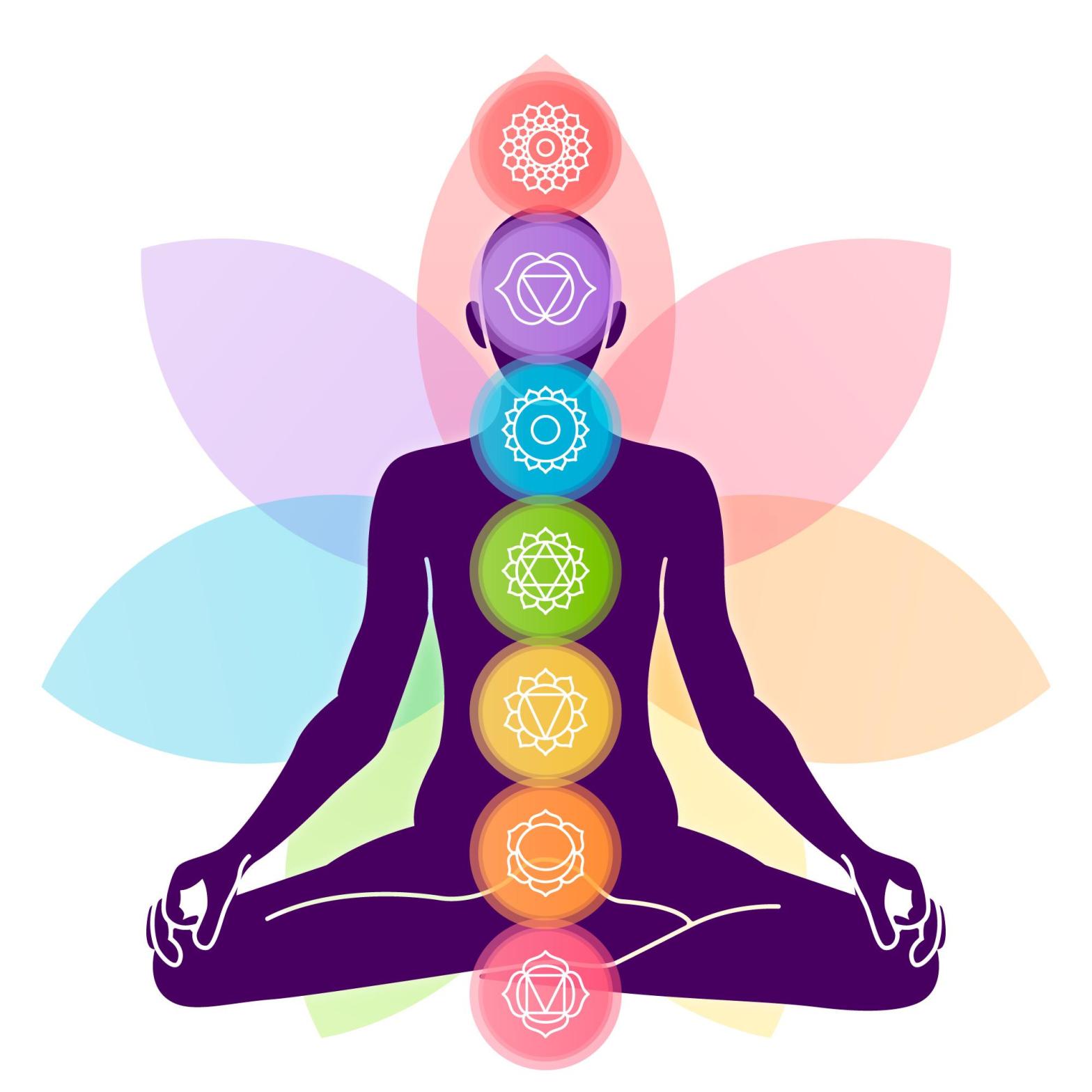
The term chakra refers to points in the body through which energy passes. This is an expression originating from Sanskrit, where this term is often interpreted as “wheel” or “disc”. Chakras are also often symbolized by lotuses with petals. Their flowering is actually a metaphor for the opening of the chakras. Lotuses, which are sacred in India, thus symbolize the path on which development takes place. The energy centers of the chakras are located in the physical, spiritual, and emotional body and there is a flow of prana, which represents life energy, in them. These currents of life energies then meet in the seven basic chakras, which are interconnected by a system of energy channels, called Nadi.
However, chakras are not only perceived in their energetic form. Chakra energy controls life processes in the body, both physically and energetically. So they are not only transformers of spiritual energy but also transformers that work between all bioenergetic fields. They transport energy, and if there is more consumption, they receive more energy. On the contrary, when there is an excess of energy, they radiate it back. Each of the individual chakras thus supplies our consciousness with specific information and controls certain endocrine glands, thereby being able to influence bodily functions through hormones and enzymes. It regulates the activity of the immune system, maintains the functions of organs, induces healing processes, and processes various sensory impressions. The dynamics of individual chakras are different for each person, and their strength or weakness determines overall health. Deviations from the normal own dynamics of the chakra then lead to disharmony and psychosomatic diseases which may begin to appear, for example. So if one of the chakras is not working well, it is said to be blocked. We have seven primary chakras, and then several secondary ones as well.
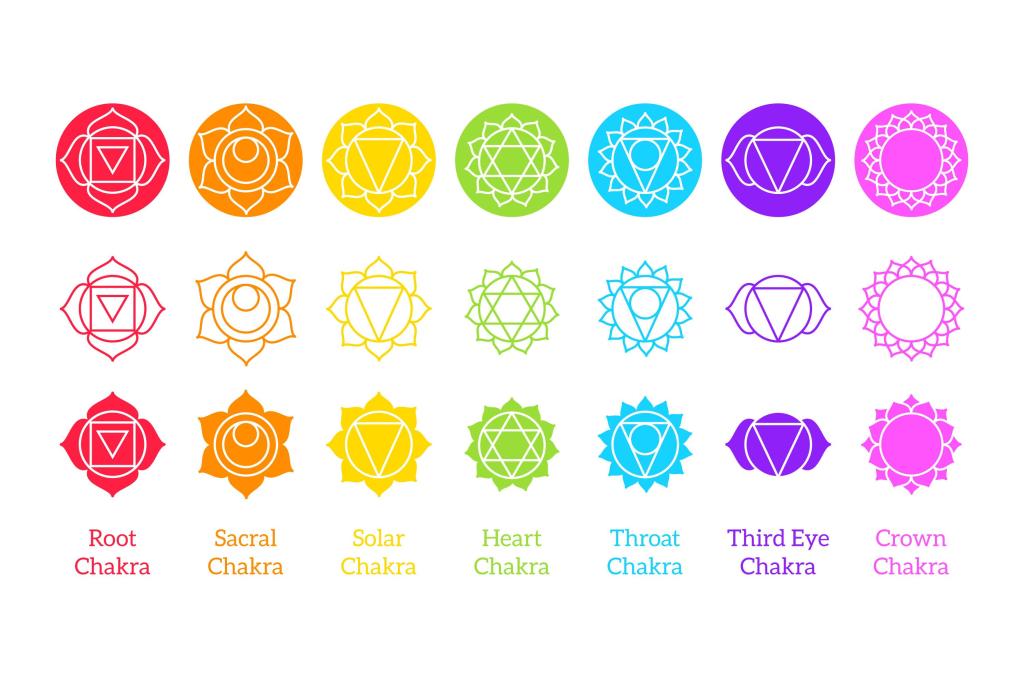
The seven basic chakras are:
- root (Muladhara)
- sacral (Svadhishthana)
- solar plexus (Manipura)
- heart (Anahata)
- throat (Vishuddha)
- third eye (Ajna)
- crown (Sahasrara)
The seven chakras that exist in the subtle, psychic body and permeate the physical body form three primary areas. The first three chakras are located very close together in the body between the lower end of the spine and the navel on an axis only a few centimeters long. The other three higher chakras – the throat, third eye, and crown chakras are, on the other hand, very closely connected in the head area, from where they control the higher brain centers. They thus have many common characteristics and higher powers of perceptual expression. Between these two triads of chakras is the heart chakra, which is the central chakra that connects the navel center with the head chakras above. Sometimes the heart chakra belongs to the higher group of chakras, and sometimes to the lower one. The energy that then awakens all individual chakras is called kundalini. This is the so-called “snake power”, which, when activated, frees a person from ignorance, and psychological lability, and develops self-discipline and wisdom.
There are three levels of working with the chakras in relation to physical ailments, psychological problems, and purely spiritual development. All emotional problems are reflected in the heart chakra, and spiritual problems are reflected in the head chakra. In the three lower chakras, in turn, physical and vital functions are reflected through the connection to individual doshas, with which most health problems are associated. Vata is connected to the root chakra, kapha is connected to the sacral chakra, and the last pitta is connected to the third chakra of the solar plexus. Diseases and disorders of the body arise from an imbalance in the functioning of the chakras at the level of numerous nerve plexuses and endocrine glands, with which they have a direct connection due to the uneven functioning of the three doshas vata, pitta, kapha.
 Sharkas Studio